
Thermal Coal Grading in African Manufacturing: Selecting Between RB1, RB2 & RB3 for Kiln Efficiency
Comparing Richards Bay Coal Terminal (RB1, RB2, RB3) benchmarks and Mozambican washed coals. How Volatile Matter, Ash Fusion Temperature (AFT), and Total Sulfur directly influence rotary kiln flame shape and clinker ring formation.
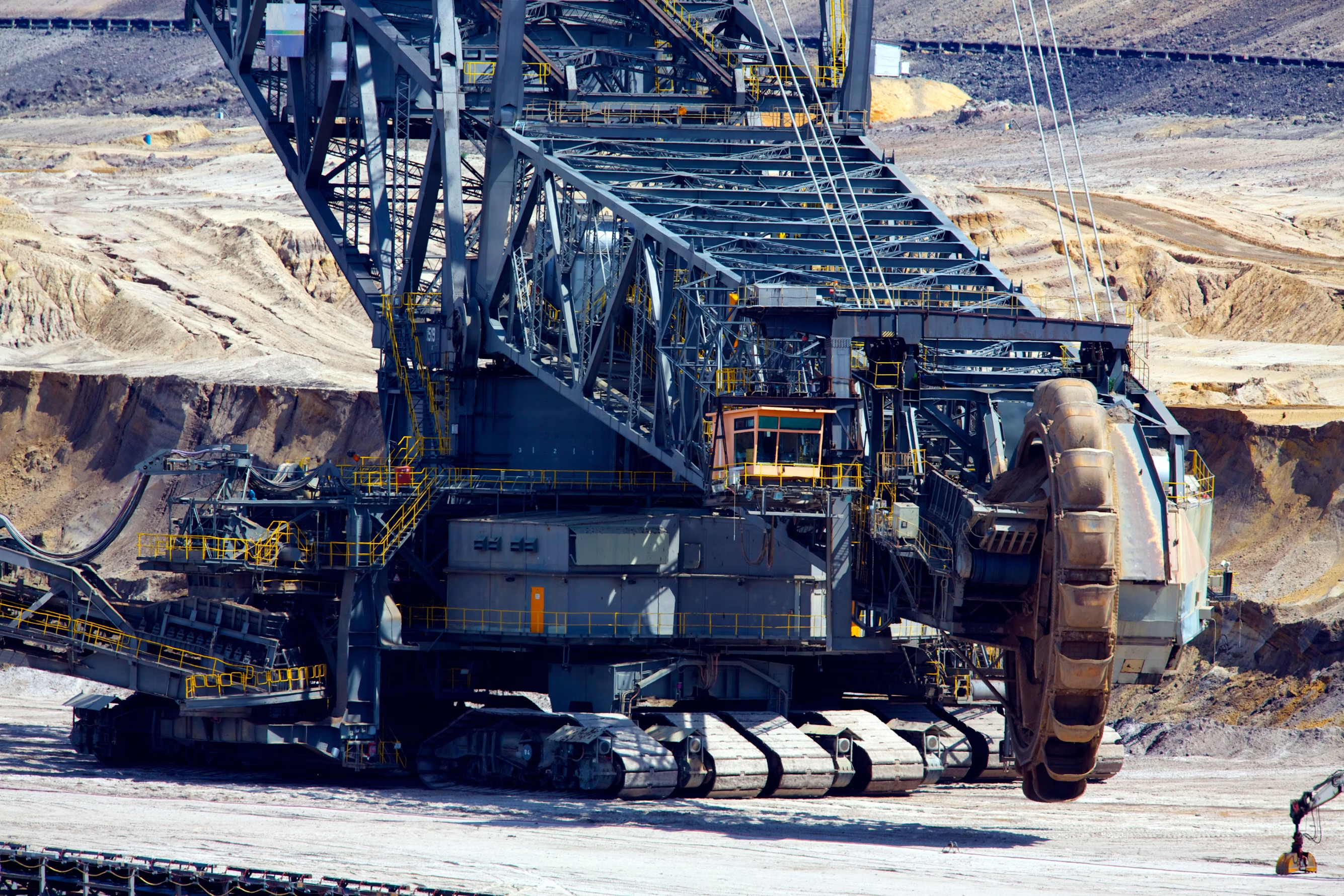
Fuel Strategy for Industrial Kilns & Captive Boilers
Energy represents between 35% and 45% of clinker production cost. While natural gas and heavy fuel oil (HFO) are prevalent in specific regions, pulverized bituminous coal remains the most reliable base-load thermal energy source for African cement kilns and heavy industrial boilers.
Understanding coal grades beyond nominal Gross Calorific Value (GCV) is essential for avoiding catastrophic kiln ring formation, cyclone blockages, and high specific heat consumption.
---
Benchmark Comparison: Richards Bay (South Africa) vs. Mozambique
| Parameter | RB1 (API4 Benchmark) | RB2 (Export Industrial) | RB3 (Power Station Grade) | Mozambique Washed | | :--- | :--- | :--- | :--- | :--- | | Gross Calorific Value (GCV - ARB) | 6,000 kcal/kg | 5,500 – 5,700 kcal/kg | 4,800 – 5,200 kcal/kg | 5,600 – 6,000 kcal/kg | | Net Calorific Value (NAR) | 5,850 kcal/kg | 5,300 – 5,450 kcal/kg | 4,600 – 4,950 kcal/kg | 5,400 – 5,800 kcal/kg | | Total Moisture (ARB) | Max 10.0% | Max 11.5% | Max 14.0% | Max 10.5% | | Ash Content (ADB) | Max 15.0% | Max 18.0% | Max 24.0% | 14.0% – 18.0% | | Volatile Matter (ADB) | 22.0% – 28.0% | 21.0% – 27.0% | 19.0% – 25.0% | 20.0% – 25.0% | | Total Sulfur (ADB) | Max 1.00% | Max 1.20% | Max 1.50% | 0.80% – 1.10% | | HGI (Grindability) | 50 – 55 | 50 – 58 | 48 – 60 | 52 – 62 |
---
Critical Operational Indicators for Cement Kiln Engineers
1. Volatile Matter (VM) & Burner Pipe Aerodynamics - High-temperature rotary kilns require rapid ignition and short, intense flame geometry. - Volatiles below 20% create an extended flame, shifting the calcination zone into the transition zone and damaging refractory bricks. - Recommended range for African kiln setups: 22% to 26% ADB.
2. Ash Fusion Temperature (AFT) & Ring Formation - In a cement kiln, 100% of coal ash is absorbed into the liquid clinker phase. - If the Initial Deformation Temperature (IDT) of the ash is too low ($<1,180^circ ext{C}$), volatile alkali-sulfur recirculating salts condense on preheater cyclone walls, causing severe build-up and unforced plant shutdowns. - Clinker Coal Logistics ensures minimum Initial Deformation Temperature of $>1,250^circ ext{C}$ on all kiln coal shipments.
3. Total Sulfur and Sulfur-to-Alkali Balance - An unbalanced sulfur/alkali molar ratio ($SO_3 / (K_2O + Na_2O) > 1.1$) generates excessive anhydrite and spurrite rings. - We match low-sulfur coal lots ($<0.85%$) specifically for cement plants using high-alkali local limestone.
Need Specific Technical Formulations for Your Kiln?
Our engineering team analyzes your plant raw meal stoichiometry and coal burner configurations to match optimal origin lots.